
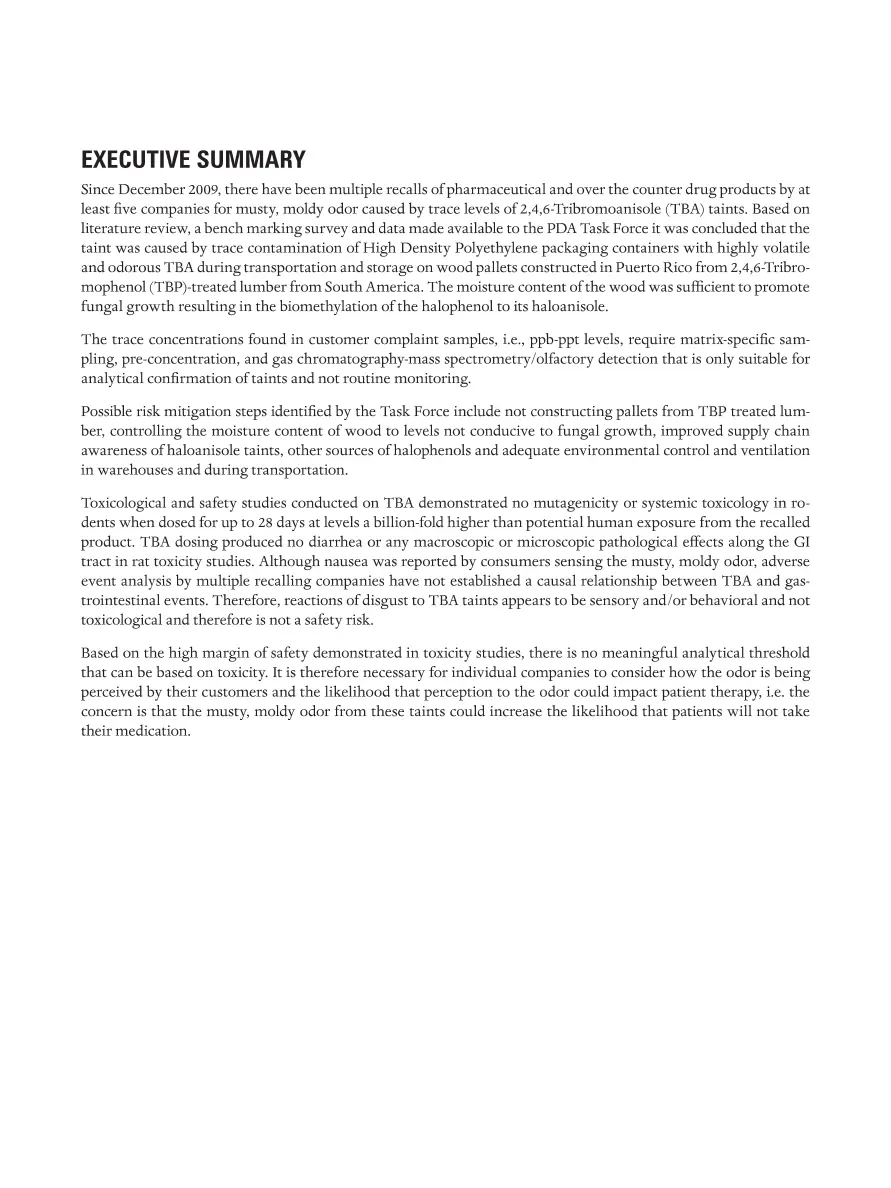
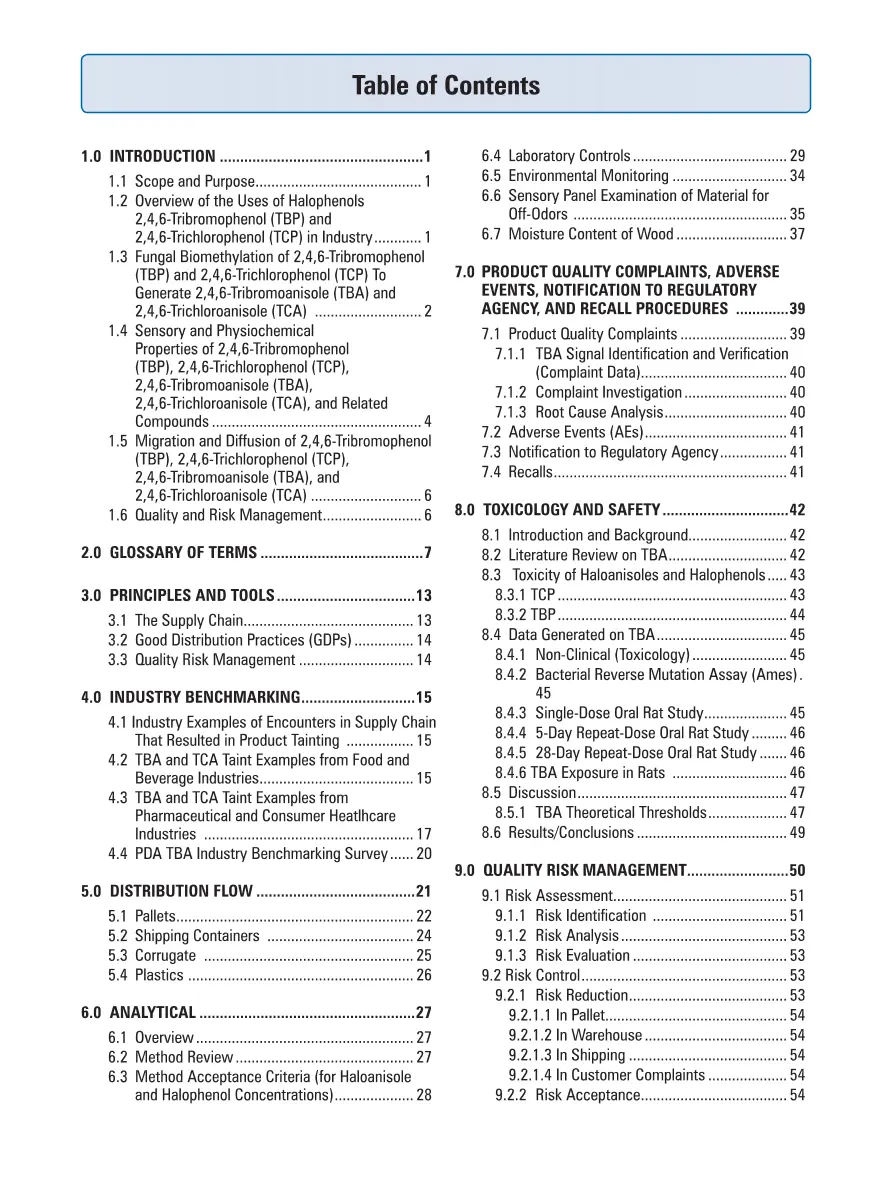
This PDA technical report provides guidance on how to detect and mitigate TBA and TCA odors and taints. Well recognized in the food and beverage industries, the literature features knowledge from these industries regarding the origin of these odors and taints, analytical methods developed, and risk management strategies employed. In 2009, this became an issue for the pharmaceutical and consumer healthcare industries with product recalls from four companies due to the risk of product exposure to the TBA taint from tribromophenol-treated wood pallets. Recalls from additional firms continued through 2011. The TBA/TCA Task Force worked very rapidly in response to the pressing need within industry for guidance on this topic. Formed at the end of 2010, the group drafted one of the most comprehensive technical reports in PDA's library in record time. This report provides background on issues with TBA and TCA taints, highlighting:
- Uses of 2,4,6-tribromophenol (TBP) and 2,4,6-trichlorophenol (TCP) in industry
- Role of fungal halophenol methylation that generates TBA and TCA haloanisole taints
- Sensory and physiochemical properties of TBP, TCP, TBA and TCA
- Case examples from food and beverage industries with root causes and remedial actions
- Recent examples of TBA taint recalls from the pharmaceutical and consumer healthcare industries
More Standards PDF
PIP REEE003
$50.00 $100.00
PIP ELEHA01-EEDS
$62.00 $125.00
PIP PN03CA1S01
$37.00 $75.00
PIP CVC01017
$25.00 $50.00